The system is processing. Please wait a moment!


- Home ELEVATOR ACCESSORIES Elevator Cabin False Ceiling
Elevator Cabin False Ceiling
MỤC LỤC NỘI DUNG
- What is a False Ceiling for an Elevator Cabin?
- Why is False Ceiling for Elevator Cabins Important?
- Detailed Structure of Elevator Cabin False Ceilings
- Trendy False Ceiling Styles for 2026
- Common Mistakes When Choosing False Ceilings for Elevator Cabins
- Criteria for Selecting Quality False Ceilings for Elevator Cabins
- Design and Construction Process
- Benefits of Investing in Elevator Cabin False Ceilings
- Elevator Cabin False Ceiling Pricing 2026
- False Ceiling Services at THANGMAYNIDEC Nidec Elevator
Have you ever stepped into an elevator and felt cramped, with unrefined lighting and an overall look that doesn't match the luxury of the building?
This happens quite often, especially in townhouses or villas that have invested heavily in interior design but neglected the cabin space – a space used every day. In fact, simply changing the ceiling design can completely change the feeling of the entire cabin.
In the context of 2026 design trends that prioritize experience and emotion, the false ceiling of an elevator cabin is no longer a secondary element but has become an important part of interior architecture. It not only helps conceal technical details but also plays a role in shaping light, creating depth, and elevating the space's sophistication.
What is a false ceiling for an elevator cabin?
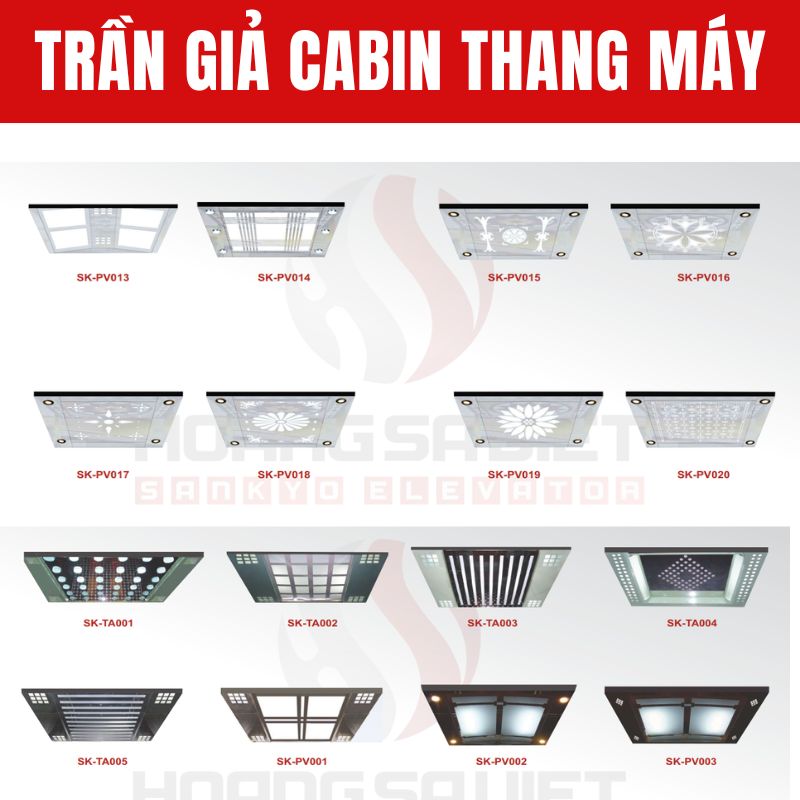
A false ceiling for an elevator cabin is a decorative ceiling installed beneath the technical ceiling of the cabin. This is the surface that users directly observe upon entering, therefore it greatly influences visual perception and psychology during travel.
Unlike the original ceiling, which only serves a technical purpose, a false ceiling is designed to address three factors simultaneously: aesthetics, lighting, and experience. A good ceiling system can instantly make a space feel more spacious, brighter, and more "expensive."
Some noticeable features of a cabin false ceiling:
- Conceals all wiring, ventilation fans, and speakers
- Integrated modern LED lighting
- Creates a design highlight for the entire cabin
Why is false ceiling for elevator cabins important?
Elevator cabins are enclosed spaces with small areas and frequent use throughout the day. Therefore, any factor affecting user perception will be "magnified." The cabin ceiling – where light is concentrated – plays a crucial role.
If the ceiling design is not well-planned, with lighting that is too harsh or too dark, users will easily feel uncomfortable, even suffocated. Conversely, when lighting is well-managed and combined with suitable reflective materials, the cabin can appear significantly larger than its actual size.
Furthermore, false ceilings are also an element that helps to harmonize the interior style. A luxury villa will look out of place if the elevator cabin is too simple. Conversely, when the cabin ceiling is properly invested in, it will become a complete part of the overall architecture.
Detailed structure of elevator cabin false ceilings
To ensure durability and operational stability, the cabin false ceiling is constructed from multiple layers. Each component plays a specific role, but they must be closely integrated to create a complete system.
Load-bearing Frame
The frame is the foundation, usually made from 304 stainless steel or galvanized steel. This is the part that bears the entire load of the ceiling system, therefore requiring high rigidity and vibration resistance.
A standard ceiling frame must ensure:
- No warping over time
- No noise during elevator operation
- Withstands continuous vibrations
Surface Material
The surface is the element that creates the "appearance" of the cabin ceiling. Depending on the design style, homeowners can choose from many different materials.
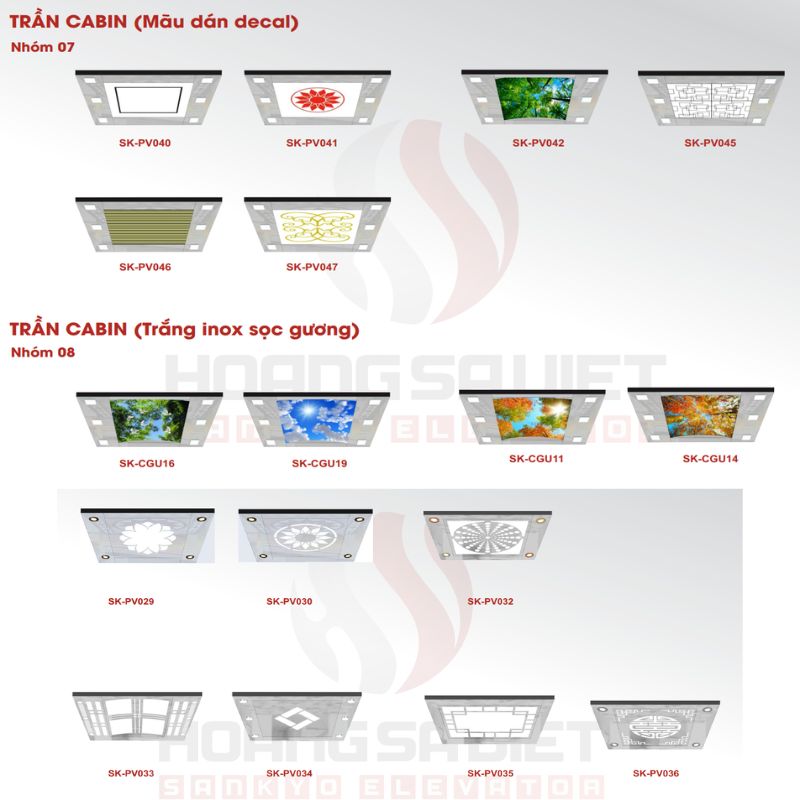
Mirror-finish stainless steel is a popular choice due to its light-reflecting properties, making the space appear larger. Meanwhile, patterned stainless steel or PVD gold-plated stainless steel provide a luxurious feel, suitable for high-end projects.
In addition, acrylic panels or translucent materials are also used to create a soft lighting effect. When combined correctly, the light will be evenly distributed, not causing glare but still providing sufficient brightness.
Lighting System
Lighting is a factor that directly determines the emotions of the users. A good ceiling system is not only "beautiful" but also "comfortable".
Typically, the system will combine several types of lighting such as:
- Neutral white LEDs for a modern space
- Warm yellow LEDs for a luxurious, cozy feel
- Indirect lighting to create depth
This combination helps prevent the cabin from looking flat and gives it a distinct visual depth.
Trendy false ceiling styles for 2026
The 2026 elevator cabin ceiling design trend is not just about aesthetics, but also about personalization and experience.
Minimalist style remains popular thanks to its sophistication and timelessness. With simple lines and soft lighting, this design style is suitable for modern townhouses or offices.
Meanwhile, the luxury style focuses on high-end materials such as gold-plated stainless steel, combined with exquisite CNC patterns. This is a popular choice for villas and penthouses where every detail must reflect class.
Another noteworthy trend is translucent ceilings. The entire ceiling surface becomes a large light source, capable of displaying images of the sky, nature, or 3D patterns. This solution is particularly effective for small cabins, helping to reduce the feeling of crampedness.
Finally, personalized design is gradually becoming the new standard. Homeowners can request custom designs, from patterns and colors to lighting arrangements, creating a space with a distinct personal touch.
Common mistakes when choosing elevator cabin false ceilings
One of the most common mistakes is choosing cheap materials to save on initial costs. However, after a short time, these materials easily tarnish, scratch, or degrade, causing the overall cabin to lose its luxurious appearance.
In addition, using overly strong lighting is also a common mistake. Harsh lighting is not only uncomfortable but also reveals material imperfections. Conversely, too weak lighting makes the cabin dark and unsafe.
Furthermore, many designs are not synchronized with the overall interior of the house. This makes the elevator a "separate block," disrupting the continuity of the design.
Criteria for selecting quality elevator cabin false ceilings
To choose a suitable ceiling system, you should consider many factors simultaneously instead of just looking at the price.
A good ceiling system needs to ensure durable materials, harmonious lighting, and a design that is consistent with the surrounding space. Maintenance is also very important, as the lighting and fan systems need to be checked regularly.
Some important criteria include:
- 304 stainless steel or equivalent material
- Evenly distributed, non-glare lighting
- Design that matches the overall style
- Easy to disassemble for maintenance
Design and construction process
The process of installing a false ceiling cabin typically begins with an on-site survey. Technicians will accurately measure the cabin dimensions and inspect the existing system to ensure a suitable design.
Next, the design team will create a 3D drawing, allowing customers to clearly visualize the product before construction. Once the design is approved, the materials will be processed using CNC or laser technology to ensure high precision.
The installation process at the site is usually quick, taking only 2–4 hours, minimizing disruption to daily life.
Benefits of investing in elevator cabin false ceilings
Investing in false ceilings not only enhances aesthetics but also directly impacts daily user experience. A bright, airy, and pleasant space will make users feel more comfortable every time they move around.
Furthermore, this is also a factor that increases property value. In many cases, a small detail like the cabin ceiling can impress customers and lead to quicker decision-making.
In the long run, using high-quality materials also helps reduce maintenance costs, minimize damage, and extend the system's lifespan.
Elevator cabin false ceiling price list 2026
The cost of installing a false ceiling depends on several factors such as cabin size, materials, and design level. Generally, prices range from basic to high-end.
- Basic: 5 to 10 million VND
- Mid-range: 10 to 20 million VND
- High-end: 20 to over 50 million VND
These are just reference prices. For an accurate quote, a site survey and specific consultation are required.
False ceiling cabin services at THANGMAYNIDEC Nidec Elevator
At THANGMAYNIDEC Nidec, false cabin ceilings are not just a product, but a complete design solution. Each project is meticulously researched to ensure a harmonious balance between aesthetics and functionality.
The company offers personalized design services, using standard 304 stainless steel and high-quality LED lighting systems. The construction process is optimized to ensure speed and accuracy.
Our greatest strength lies in our extensive experience across numerous projects, allowing us to provide solutions tailored to each specific space.
The false ceiling of an elevator cabin is a small detail, but it has a significant impact on the experience and overall class of the building. When properly designed, it not only improves lighting but also creates an inspiring space for movement.
Contact information
HOANG SA VIET INVESTMENT AND DEVELOPMENT CO., LTD.
Address: 184/20A Le Dinh Can Street, Tan Tao Ward, Ho Chi Minh City
Hotline: 0707025789
Email: nidec@hoangsaviet.com
Website: thangmaynidec.vn
Working Hours: 8:00 AM - 5:00 PM daily
PRICE SUCCESSFUL!
PRICE UNSUCCESSFUL!
Hotline 0707.025.789
hungpham@hoangsaviet.com
OFFICE ADDRESS
- Headquarters:184/20 Le Đinh Can Street,Tan Tao Ward, Binh Tan District , HCM City
- Ha Noi branch: Đ. Giap Hai, Khoan Te, Gia Lam, Ha Noi
- Hung Yen branch: EcoPark Urban Area, Hung Yen
- Phu Quoc branch: ĐT45, Duong Đong, Phu Quoc
- Long An branch: Viettruss Aluminum - Ben Luc, Long An
- Factory: E5/13 Thich Thien Hoa, Le Minh Xuan, Binh Chanh, HCM City
BANK ACCOUNT
- THANGMAYNIDEC COMPANY
- Account number: 134053669
- Bank: ACB
- Branch: Bình Trị Đông, Bình Tân

CONTACT INFO
- Hotline: 0707.025.789
- Email:hungpham@hoangsaviet.com
- Website: https://thangmaynidec.vn/en
- Tax Code: 0310779837
- Business Registration No.: 0310779837, issued by Ho Chi Minh City Department of Planning and Investment on 15/04/2011

© Copyright 2026. Copyright belong to THANGMAYNIDEC Elevator