The system is processing. Please wait a moment!


- Home PASSENGER ELEVATORS - PACKAGE PRICE QUOTATION 2026
PASSENGER ELEVATORS - PACKAGE PRICE QUOTATION 2026
Sorted by:
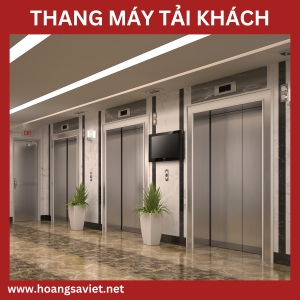
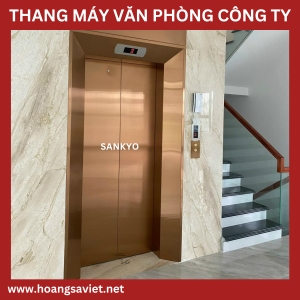
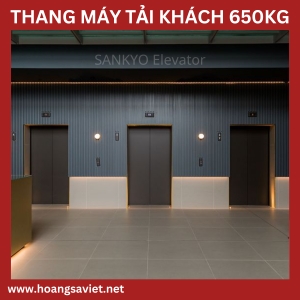
TABLE OF CONTENTS
Passenger Elevators: A Guide to Choosing the Right Type for Each Project
"Brother, I'm opening a 6-story hotel in Da Nang, what type of passenger elevator should I install?" This is a question I receive quite often. And honestly, there's no "size fits all" answer. A 630kg passenger elevator might be the perfect choice for a mini-hotel, but it's overkill for a townhouse, while it's far too little for a central office building.
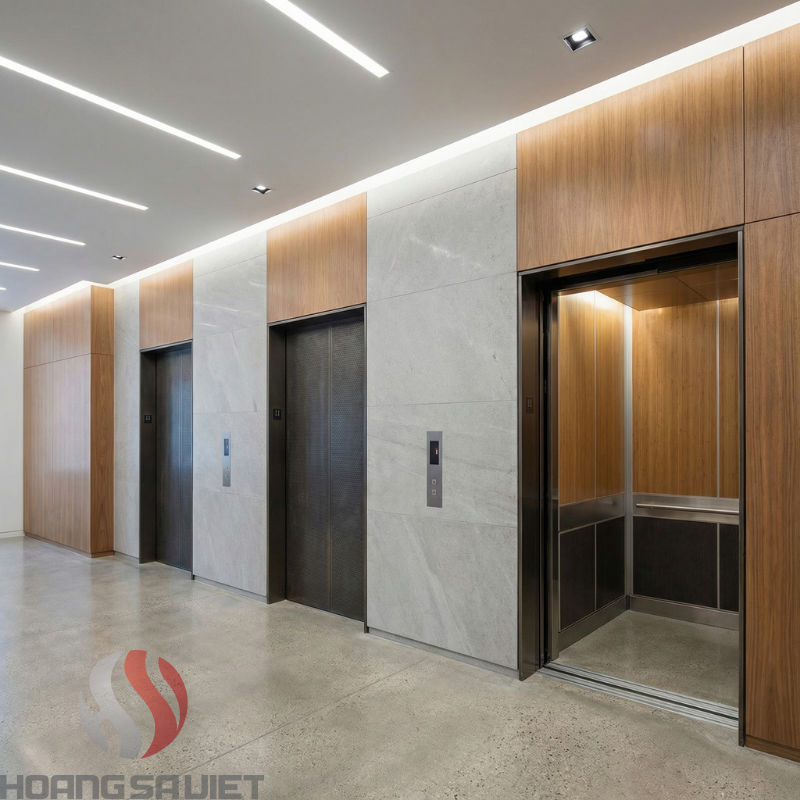
If you are planning to invest in a passenger elevator and are still undecided between different segments, this article will help you get a complete picture: what a passenger elevator is, its classification by building type, which load capacity size is suitable for which needs, and most importantly, how to avoid over-investing or under-investing.
What is a passenger elevator? How is it different from a home elevator?
Passenger elevators are designed to transport many people between floors in high-traffic buildings such as offices, hotels, hospitals, shopping malls, apartment buildings, and restaurants. The core characteristics of passenger elevators are their high load capacity (450 kg or more), high speed (1 m/s or more), and the ability to operate continuously.
The fundamental difference compared to a home elevator:
|
Criteria |
Passenger elevator |
Home elevators |
|---|---|---|
|
Target users |
Public, many strangers |
Family members |
|
Common loads |
450 to 2,000 kg |
200 to 450 kg |
|
Operating speed |
1.0 to 2.5 m/s |
0.15 to 1.0 m/s |
|
Number of people/trip |
6 to 26 people |
2 to 6 people |
|
Number of floors |
5 to 40+ floors |
2 to 8 floors |
|
Frequency of use |
Continuously for 10 to 14 hours/day |
20 to 40 trips/day |
|
Safety standards |
Higher (Fire Protection, EN 81-20, TCVN 6396) |
Vietnamese National Standard (TCVN) specifically for home elevators. |
|
Investment costs |
300 million to 2 billion |
150 to 500 million |
|
Maintenance |
2 to 4 times/month (mandatory) |
1 to 2 times/month |
Understanding this difference is the first step to making the right choice. Many investors make mistakes and choose incorrectly, leading to two common situations: overbuying (installing a 1,000kg elevator for a 5-story townhouse) or underbuying (installing a 250kg elevator for a 20-room mini-hotel).
Common Types of Passenger Elevators in Vietnam
1. Classification by load
This is the most common classification method when choosing passenger elevators. Each load capacity is suitable for a specific type of building:
|
Load |
Number |
Suitable construction |
Reference price |
|---|---|---|---|
|
450 kg |
6 people |
Townhouses for rent, small homestays, mini offices. |
280 to 400 million |
|
630 kg |
8 people |
Mini hotels (3-4 stars), office buildings under 10 floors. |
350 to 550 million |
|
750 kg |
10 people |
Average office space, 4-star hotel, mini-apartment. |
420 to 650 million |
|
1,000 kg |
13 people |
Large office buildings, 5-star hotels, hospitals |
550 to 950 million |
|
1,350 kg |
17 people |
Luxury apartments, shopping mall |
750 million to 1.3 billion |
|
1,600 kg |
21 people |
Large building, general hospital |
950 million to 1.6 billion |
|
2,000 kg |
26 people |
Office buildings, large shopping malls |
1.3 to 2.5 billion |
2. Classification by technology
Machine Room Elevators: Traditional type, with the traction machine located on the elevator shaft roof. Advantages include high load capacity, high speed, and ease of maintenance. Disadvantages include the need for an additional technical floor on the roof.
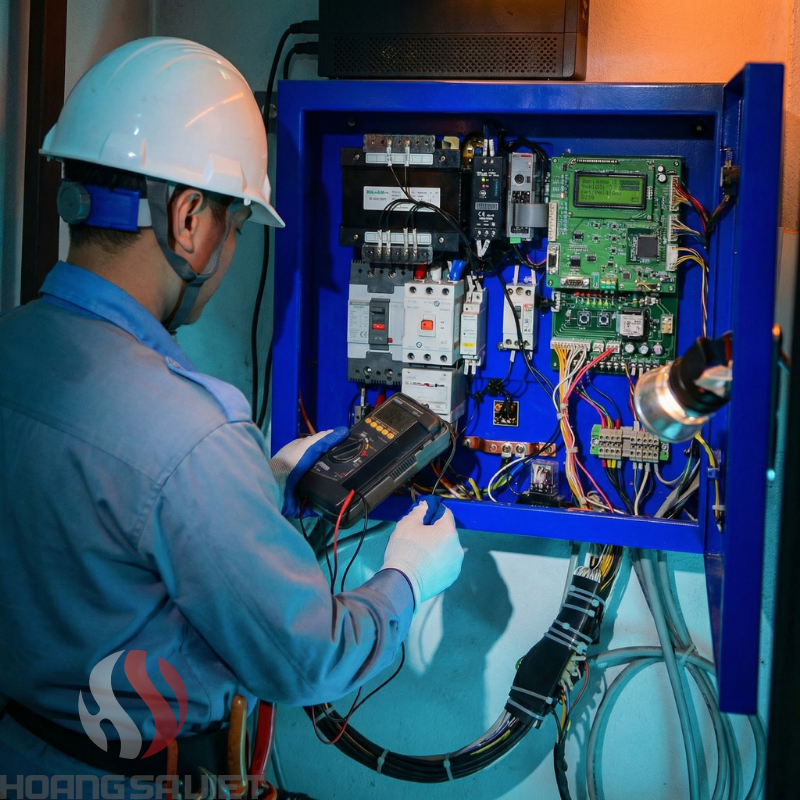
Machine Roomless (MRL) elevators: The traction machine is compactly mounted within the elevator shaft. This saves one technical floor and is suitable for buildings that want to maximize space utilization. Currently, it is the dominant trend in Vietnam for the 630kg to 1,600kg capacity segment.
Hydraulic elevators: Use oil pressure to lift the cabin. They operate smoothly and are suitable for low-rise buildings (under 6 floors). The disadvantages are slow speed and higher energy consumption.
3. Classification by speed
-
Low speed (< 1.0 m/s): Buildings under 7 stories, townhouses for rent.
-
Average speed (1.0 to 1.75 m/s): 7-15 story office buildings, medium-sized hotels
-
High speed (2.0 to 2.5 m/s): 15-25 story buildings, 5-star hotels
Very high speed (> 2.5 m/s): Buildings over 25 stories high, less common in Vietnam.
3 Common Mistakes When Choosing a Passenger Elevator
Through advising numerous investors in Vietnam, I've identified three of the most costly mistakes:
Mistake 1: Choosing load capacity based on "number of floors" instead of "person traffic"
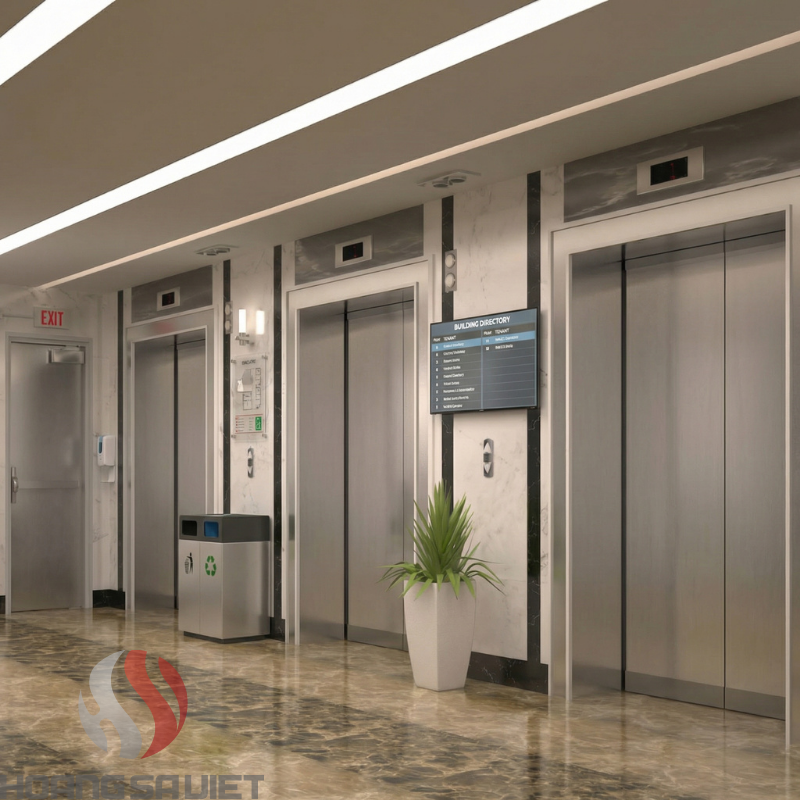
Many building owners think, "For an 8-story building, a 750kg elevator is sufficient." Wrong. Elevator load capacity should be calculated based on the number of people entering during peak hours, not the number of floors.
Simple recipe:
-
Hotel: Number of rooms × 1.5 × 15% = Number of people / 5 minutes of peak time
-
Office: Number of employees × 12% = Number of people / 5-minute peak
-
Apartment building: Number of apartments × 4 × 7% = Number of people / 5 minutes of peak traffic
For example: A 30-room hotel → 30 × 1.5 × 15% = 6.75 people/5 minutes. Each elevator trip needs to carry 7 people → requires an elevator with a capacity of 630kg (8 people), not 450kg as many people think.
Mistake 2: Being tempted by cheap, substandard components.
Passenger elevators operate continuously for 10 to 14 hours a day, 5-10 times more frequently than home elevators. Poor quality components will break down very quickly.
-
Motors of unknown origin: lifespan of 3 to 5 years (compared to 15 to 20 years for genuine products)
-
Floating steel cables: must be replaced after 2 to 3 years.
-
Faulty control board: freezing, incorrect floor selection, door jamming.
Actual cost: You might save 80 to 150 million initially, but after 10 years, it will cost an additional 300 to 500 million for repairs and downtime. Not to mention safety risks.
Mistake 3: Ignoring fire safety requirements and inspections.
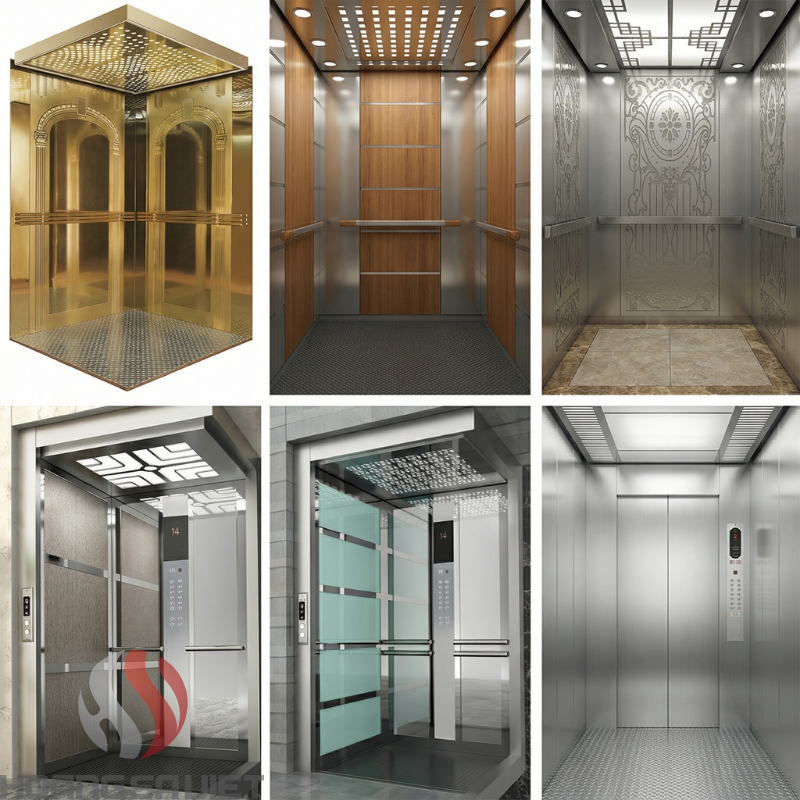
Passenger elevators installed in public buildings (hotels, offices, apartment buildings) must meet the following requirements:
-
There are fire-resistant doors that meet EI60 or EI90 standards (depending on the building height).
-
Connect to the building's fire alarm system.
-
It has a fire service mode.
-
Annual periodic inspection by a unit licensed by the Ministry of Labour, Invalids and Social Affairs.
If you choose a supplier that doesn't meet these standards, the fire safety system will be rejected during the acceptance inspection, and you'll be forced to replace the entire elevator. This is a very real risk, not a threat.
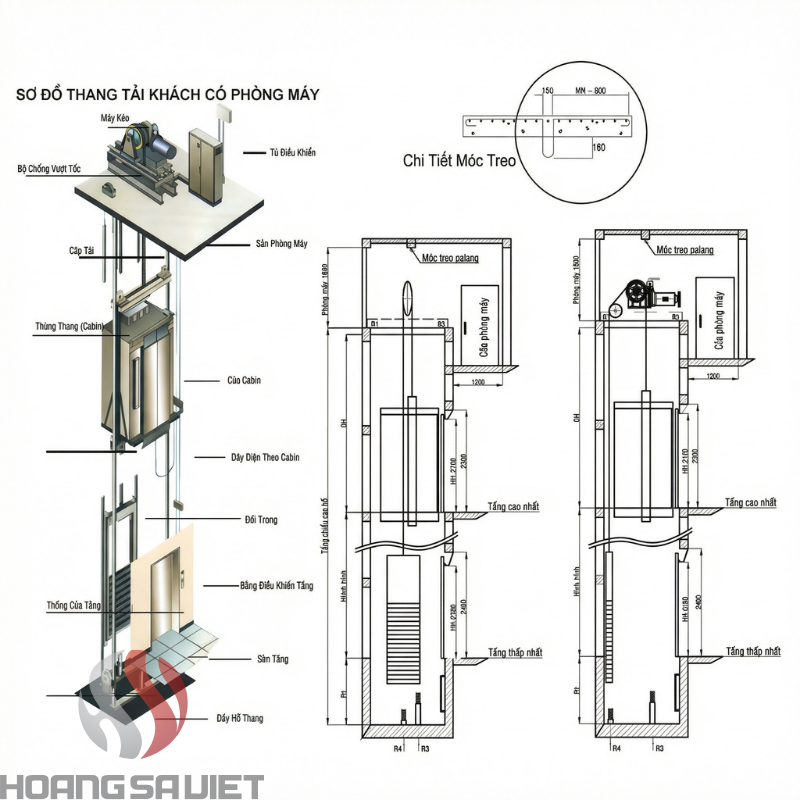
Standard Ladder Shaft and Pit Sizes
This is important information for you during the building design phase. I've compiled it according to common load levels:
|
Load |
Elevator shaft dimensions (W x D) |
Cabin dimensions (WxD) |
Pit |
Height of OH |
|---|---|---|---|---|
|
450 kg |
1,600 x 1,500 mm |
1,100 x 1,000 mm |
1,400 mm |
3,800 mm |
|
630 kg |
1,800 x 1,700 mm |
1,200 x 1,200 mm |
1,500 mm |
4,000 mm |
|
750 kg |
1,800 x 1,900 mm |
1,400 x 1,300 mm |
1,500 mm |
4,000 mm |
|
1,000 kg |
2,100 x 2,100 mm |
1,600 x 1,500 mm |
1,600 mm |
4,200 mm |
|
1,350 kg |
2,400 x 2,300 mm |
1,800 x 1,600 mm |
1,700 mm |
4,500 mm |
|
1,600 kg |
2,600 x 2,400 mm |
2,000 x 1,750 mm |
1,800 mm |
4,500 mm |
Important note: The dimensions above are for reference only for standard MRL elevator shafts. Depending on the specific manufacturer and model, there may be a difference of 50 to 150mm. The correct principle is: obtain accurate technical drawings from the supplier before constructing the elevator shaft; do not pour concrete based on "estimated" measurements.
Price List for Passenger Elevators on the Market
The price of a passenger elevator depends on four main factors: the origin of the components, the load capacity, the number of floors, and the level of cabin finishing. See the following price list for reference:
Joint venture passenger elevator (Japanese components, assembled in Vietnam)
|
Load |
5 floors |
7 floors |
10 floors |
15 floors |
|---|---|---|---|---|
|
450 kg |
280 million |
330 million |
400 million |
500 million |
|
630 kg |
380 million |
440 million |
520 million |
650 million |
|
750 kg |
450 million |
520 million |
620 million |
780 million |
|
1,000 kg |
600 million |
690 million |
820 million |
1 billion |
Passenger elevators are imported as complete units (from Germany, Italy, and Japan).
|
Load |
5 floors |
10 floors |
15 floors |
|---|---|---|---|
|
630 kg |
650 million |
850 million |
1.1 billion |
|
1,000 kg |
950 million |
1.3 billion |
1.7 billion |
|
1,350 kg |
1.2 billion |
1.6 billion |
2 billion |
Hidden costs that need to be considered:
-
Construction of concrete elevator shafts: 80 to 200 million VND
-
Fire-resistant doors (upgraded): 15 to 30 million VND/floor
-
Three-phase electricity (if not already installed): 20 to 50 million VND.
-
Maintenance in the first year after warranty: 8 to 20 million VND/year
When Should You NOT Choose a Passenger Elevator?
This is a point that is rarely mentioned in articles, but it is very important. Not every building needs a passenger elevator. In many cases, choosing a home elevator or mini elevator would be much more appropriate:
A detached townhouse with 4-6 floors, suitable for a family of 4-6 people:
Installing a 450kg passenger elevator is overkill. A mini elevator with a 250-350kg capacity is sufficient and saves 150 to 250 million VND.
Homestay, short-term rental house with 6-10 rooms:
With a peak traffic of 4-5 people per hour, a 350kg home elevator can still handle it well. There's no need to lift 630kg passengers.
Small office with fewer than 10 employees and fewer than 5 floors:
High-end or mini pitless home elevators are a cost-effective and convenient option.
The renovator couldn't dig a pit that deep enough:
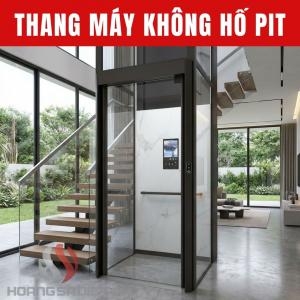
Standard passenger elevators require a pit depth of 1,400 to 1,800mm. Renovating a building might not meet this requirement. In this case, Hoang Sa Viet's pitless mini elevators (requiring only a 50mm pit or none at all) are the only viable option.
Suggestions from Hoang Sa, Vietnam
Hoang Sa Viet provides passenger elevators for office buildings, hotels, and mini-apartment complexes. However, Hoang Sa Viet's greatest strength lies in its pitless mini-home elevators, serving small and medium-sized projects where installing traditional passenger elevators is not feasible or too expensive.
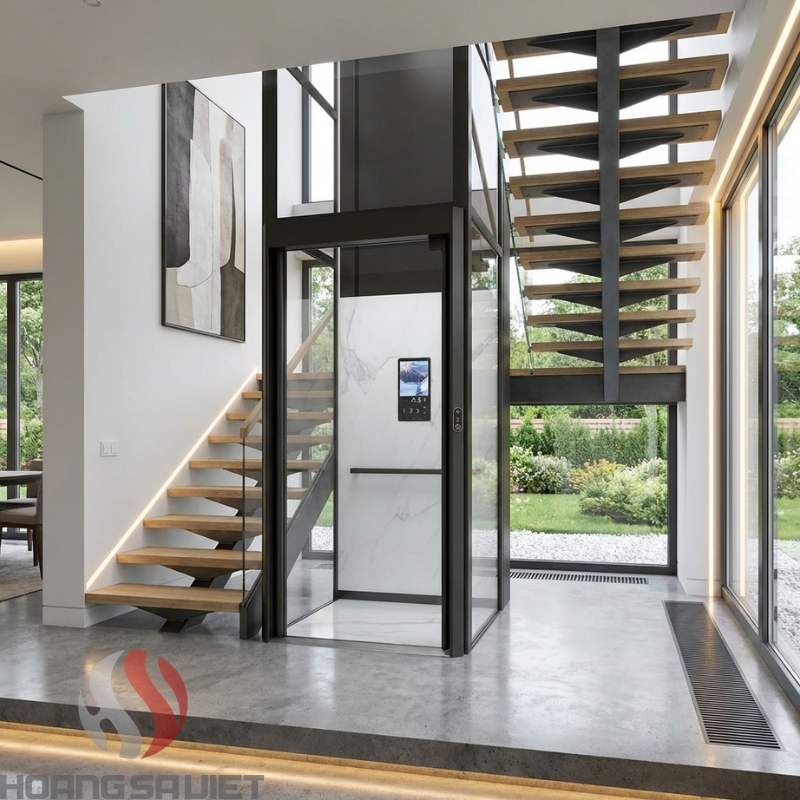
If your building falls into one of the following categories, consider Hoang Sa Viet's home elevator solution instead of a traditional passenger elevator:
-
Townhouses, detached houses with 3 to 8 floors.
-
House for rent, homestay with fewer than 10 rooms
-
Mini office space under 5 floors, with fewer than 15 employees.
-
The renovator couldn't dig the pit.
-
Investment budget under 350 million
Why? For these projects, Hoang Sa Viet's pitless mini elevators offer:
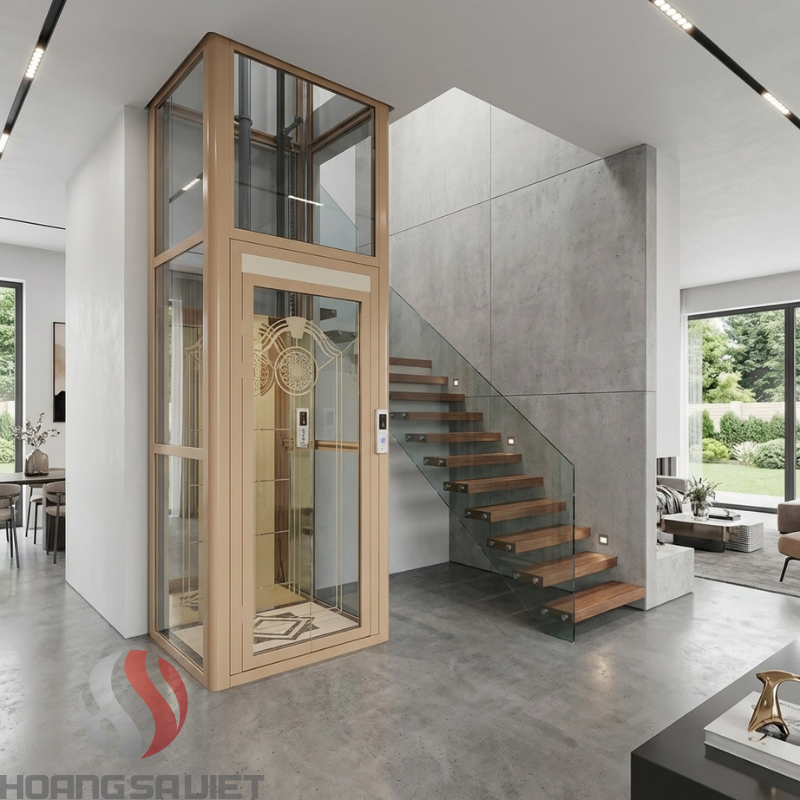
-
Genuine Kinetec by Nidec (Japan) motor, operates quietly at 45 dB, 20-year lifespan.
-
Compact elevator shafts measuring 1,200 x 1,100 mm
-
No pit required, or a super-shallow 50mm pit is necessary.
-
The price is only 1/2 to 2/3 of that of a traditional passenger elevator of the same size.
-
24-month warranty, troubleshooting within 2 hours.
However, if you are investing in a large hotel, high-rise office building, apartment complex, hospital, etc., then passenger elevators from specialized manufacturers are still the right choice. Hoang Sa Viet is ready to provide objective advice to help you choose the most suitable solution for your actual scale.
Frequently Asked Questions About Passenger Elevators
Are passenger elevators required to undergo inspection?
Yes. According to Circular 36/2019/TT-BLDTBXH, all passenger elevators must undergo an initial inspection before being put into use and a periodic inspection every 3 years. The inspection cost ranges from 3 to 8 million VND depending on the size. The inspection unit must be licensed by the Ministry of Labor, Invalids and Social Affairs.
What is the difference between a 630kg passenger elevator and a 450kg home elevator?
The difference lies not only in load capacity (630kg vs 450kg) but also in: speed (passenger elevators are 2-3 times faster), high-frequency construction (continuous operation of 12+ hours/day), and fire safety standards. 450kg home elevators are not permitted in public buildings such as hotels or office buildings.
What are the monthly operating costs for a passenger elevator with a 1,000kg capacity?
Electricity costs are approximately 1.5 to 3 million VND per month (depending on usage frequency). Plus, there are regular maintenance costs of 800,000 to 1.5 million VND per month. Total operating costs are approximately 2.5 to 5 million VND per month for a 1,000kg elevator in a 10-story office building.
Can passenger elevators be installed in family townhouses?
Yes, but not recommended. Passenger elevators are large in size and load capacity, expensive, and take up more space than home elevators. For 4-6 story townhouses, a home elevator or mini elevator is much more cost-effective.
How long does it take to install a passenger elevator?
For standard passenger elevators, the time from order to delivery is approximately 45 to 75 days (including 20-30 days for manufacturing, 5-10 days for shipping, 10-20 days for installation, and 5-10 days for inspection). For fully imported elevators, the time can extend to 90 to 120 days.
Learn more:
- Home Elevators
- Screw Elevator
- Flat Cable Elevator
- Mini Elevator with 250kg Capacity and Automatic Doors
Conclusion
Choosing the right passenger elevator isn't just about "installing the biggest one possible." It's a balancing act between actual needs, budget, technical requirements, and long-term vision. Buying too much is wasteful, buying too little will lead to regret. Both are costly.
Final advice: have a technician survey the site in person before making a decision. Each project has its own unique structural characteristics, traffic flow, and budget, and no online price list can replace a real-world survey.
If your project falls under the category of townhouses, homestays, mini offices, or house renovations, the Hoang Sa Viet team is ready to provide free consultation. We will help you assess whether a traditional passenger elevator or a pitless mini elevator would be more suitable. Our goal is to help you choose the right option, not to make a sale.
HEADQUARTERS - FACTORY
- HCMC: 184/20A Le Dinh Can Street, Tan Tao Ward, Binh Tan District, Ho Chi Minh City
- Hanoi: TN3-28 Thien Nga Street, Vinhome Co Loa, Hanoi
- Da Nang: No. 4 Huynh Thuc Khang Street, Block 4, Dien Ban Ward
- Aluminum Factory: Nguyen Huu Tri - Ben Luc, Long An
- Factory: E5/13 The Lu Street, Le Minh Xuan Ward, Binh Chanh District, Ho Chi Minh City
- Hanoi Warehouse: No. 229, Van Tri Street, Van Noi Ward, Dong Anh District
LIST OF BRANCHES
- Da Nang: No. 4 Huynh Thuc Khang Street, Block 4, Dien Ban Ward
- Hung Yen: Vinhomes Ocean Park 2, Nghia Tru, Van Giang
- Hai Phong: 1A/580 Ngo Gia Tu Street, Hai An Ward, Hai Phong City
- Phu Quoc: DT45, Duong Dong, Phu Quoc
- Gia Lai: 41D Mac Thi Buoi Street - Pleiku
- Kontum: 95 Huynh Dang Tho Street - Kon Tum City
- Daklak-Phu Yen: No. 10 E Nguyen Thi Dinh Street, Buon Ma Thuot Ward
CONTACT INFORMATION
- Hotline: 0707.025.789
- Email: hungpham@hoangsaviet.com
PRICE SUCCESSFUL!
PRICE UNSUCCESSFUL!
Hotline 0707.025.789
hungpham@hoangsaviet.com
OFFICE ADDRESS
- Headquarters:184/20 Le Đinh Can Street,Tan Tao Ward, Binh Tan District , HCM City
- Ha Noi branch: Đ. Giap Hai, Khoan Te, Gia Lam, Ha Noi
- Hung Yen branch: EcoPark Urban Area, Hung Yen
- Phu Quoc branch: ĐT45, Duong Đong, Phu Quoc
- Long An branch: Viettruss Aluminum - Ben Luc, Long An
- Factory: E5/13 Thich Thien Hoa, Le Minh Xuan, Binh Chanh, HCM City
BANK ACCOUNT
- THANGMAYNIDEC COMPANY
- Account number: 134053669
- Bank: ACB
- Branch: Bình Trị Đông, Bình Tân

CONTACT INFO
- Hotline: 0707.025.789
- Email:hungpham@hoangsaviet.com
- Website: https://thangmaynidec.vn/en
- Tax Code: 0310779837
- Business Registration No.: 0310779837, issued by Ho Chi Minh City Department of Planning and Investment on 15/04/2011

© Copyright 2026. Copyright belong to THANGMAYNIDEC Elevator