The system is processing. Please wait a moment!


- Home Suitable Elevator Power Consumption - How to Save Electricity When Using Elevators

Suitable Elevator Power Consumption - How to Save Electricity When Using Elevators
TABLE OF CONTENTS
- What is the power consumption of a home elevator?
- How to calculate power consumption of home elevator
- Comparison table of power consumption between home elevator brands
- What is the appropriate power consumption of an elevator?
- How to save electricity when using home elevators
- Address providing elevators with optimal capacity, reputation and quality
When looking for a home elevator solution , one of the most important and worth considering factors is the power consumption of the elevator . This not only relates to the load carrying capacity, but also determines the energy efficiency and operating costs. The power of the home elevator , usually measured in kW, is a criterion that needs special attention to ensure that the equipment meets the needs of the family and the sustainability standards.
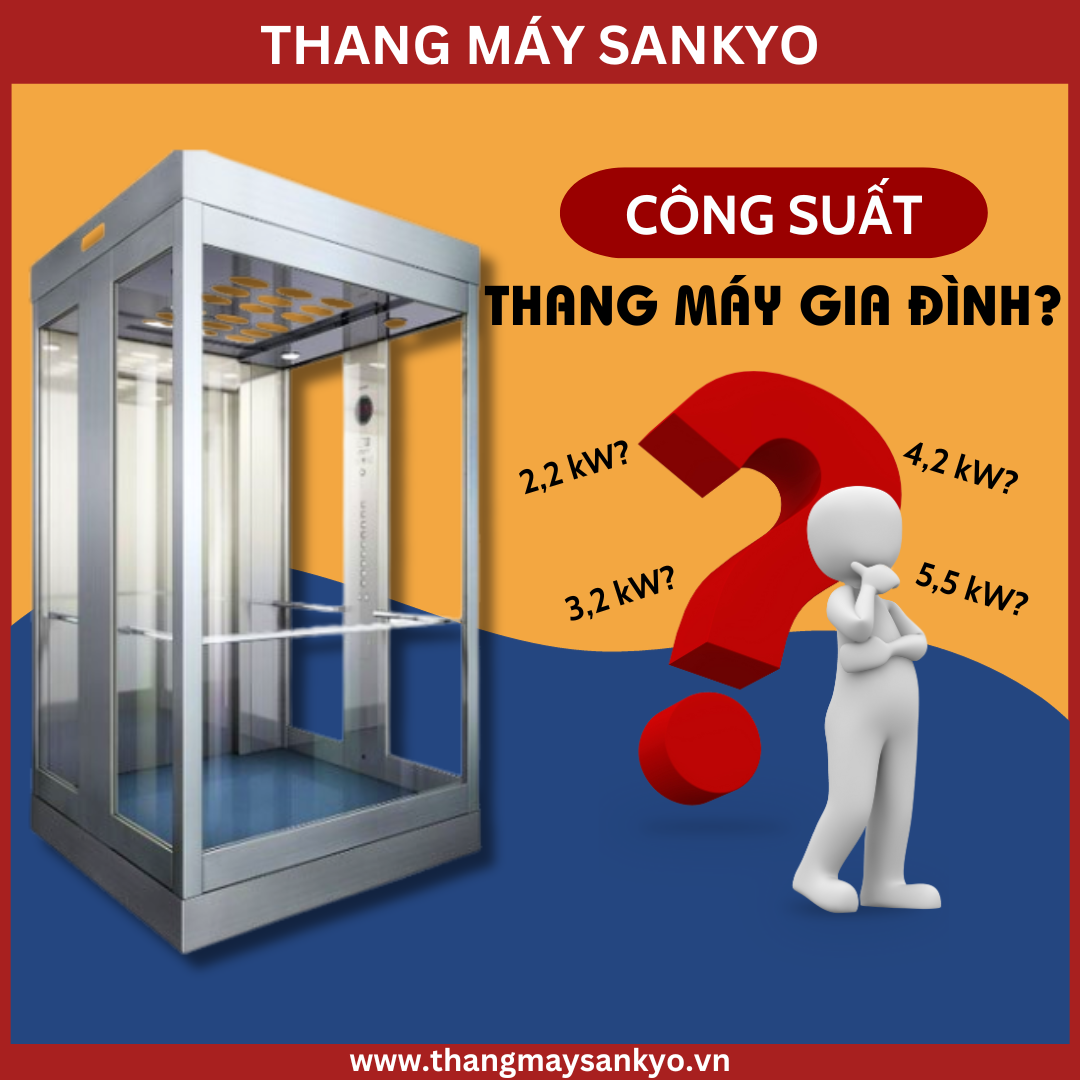
So the question: " What factors affect the power consumption of a home elevator? How to save electricity best? " Many people wonder whether they should install a home elevator or not. Understanding this, in the article below SANKYO Elevator - we will answer your questions, please join us to find out!
SEE MORE PRODUCTS:
.png "thang máy kính gia đình")
.png "thang máy tải khách")
.png "elevator maintenance")
WHAT IS THE POWER CONSUMPTION OF A HOME ELEVATOR?
The power consumption of a home elevator is the amount of electricity the elevator consumes during operation. This elevator power is measured in Kilowatts (kW) and is often one of the important parameters when evaluating the energy efficiency of the device.
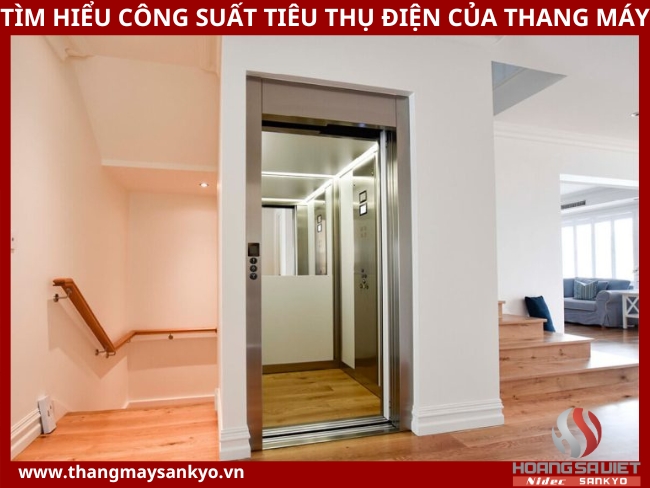
The power consumption of an elevator is affected by many factors, including the load weight , travel distance , operating speed and the technical structure of the elevator . Understanding this power consumption helps users make smart decisions when choosing the right equipment for their specific needs and the desired level of energy savings.
Information on power consumption is often provided in elevator specifications and can be used by consumers to choose the most energy-efficient equipment for their home or business.
HOW TO CALCULATE ELECTRIC CONSUMPTION OF HOME ELEVATORS
Based on the definition of elevator capacity above. We can calculate the power consumption of the elevator according to the following formula:
|
P (elevator capacity) = Energy used / Unit time |
For home elevators, the elevator's power consumption is calculated based on each type of elevator and elevator load. Specifically:
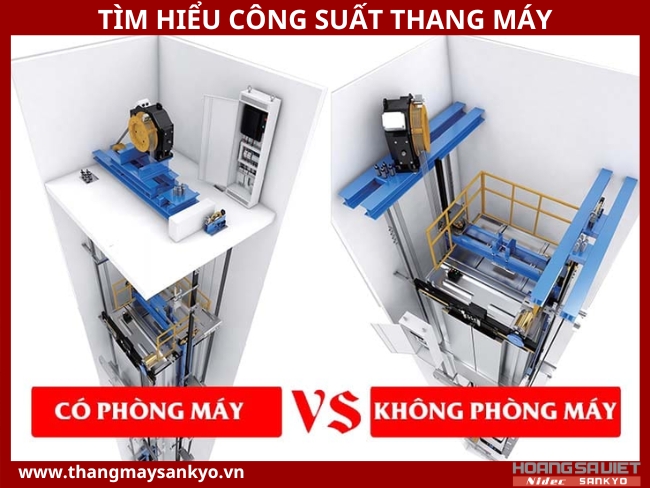
Power consumption of home elevator with machine room
With home elevators with machine rooms , the elevator's power consumption will correspond to each different load:
|
STT |
Load capacity of home elevator with machine room |
Elevator capacity |
|
1 |
Family elevator 300kg - 350kg |
3.0 kW |
|
2 |
Family elevator 400kg - 450kg |
5.0 kW |
|
3 |
Family elevator 500kg - 800kg |
7.5 kW |
|
4 |
Family elevator 900kg or more |
11 kW |
Power consumption of home elevator without machine room
Similar to the family elevator line with machine room , the power consumption of the elevator product without machine room also depends on each elevator load level.
|
STT |
Load capacity of home elevator without machine room |
Elevator capacity |
|
1 |
Family elevator 300kg - 350kg |
2.2 kW |
|
2 |
Family elevator 400kg - 450kg |
3.2 kW |
|
3 |
Family elevator 500kg - 800kg |
4.5 kW |
|
4 |
Family elevator 900kg or more |
5.5 - 6.7 kW |
With the power consumption as mentioned above, it is easy to see that, with the same lifting weight, the elevator without machine room will have lower capacity than the elevator with machine room.
Therefore, machine room-less elevators are often preferred because they bring the benefit of saving electricity costs to customers. Over a long period of use, the electricity cost that this machine room-less elevator line can optimize is a significant number.
SEE MORE PRODUCTS:
COMPARISON TABLE OF ELECTRICITY CONSUMPTION BETWEEN FAMILY ELEVATOR BRANDS
Below is a comparison table of home elevator capacity between several popular elevator brands on the market:
|
STT |
Elevator load |
Elevator with machine room |
|||
|
Mitsubishi |
Hitachi |
Otis |
Fuji |
||
|
1 |
300 - 350kg |
3.0 kW |
3.2 kW |
3.5 kW |
3.7 kW |
|
2 |
400 - 450kg |
5.0 kW |
5 kW |
5.5 kW |
5.5 kW |
|
3 |
500 - 800kg |
7.5 kW |
7.2 kW |
7.8 kW |
7.5 kW |
|
4 |
900kg |
11 kW |
11.5 kW |
11.2 kW |
11 kW |
|
Machine room-less elevator |
|||||
|
1 |
300 - 350kg |
2.2 kW |
2.5 kW |
2.5 kW |
2.7 kW |
|
2 |
400 - 450kg |
3.2 kW |
3.5 kW |
3.7 kW |
3.5 kW |
|
3 |
500 - 800kg |
4.5 kW |
4.5 kW |
4.8 kW |
5.5 kW |
|
4 |
900kg |
5.5 - 6.7 kW |
7 kW |
7.5 kW |
7.5 kW |
HOW MUCH ELECTRIC CONSUMPTION IS SUITABLE FOR AN ELEVATOR?
To find the right elevator product, there are many related factors to consider. In particular, the following points should be considered:
Customers should use elevator products that are suitable for their family situation.
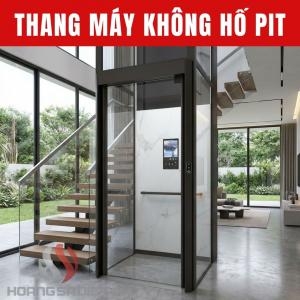
Home elevators without machine rooms , even with the same lifting capacity, often have lower capacity than elevators with machine rooms. Therefore, machine room-less elevators not only help customers solve the problem of saving electricity but are also an effective choice.
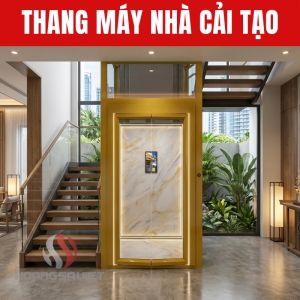
Machine room- less elevators are also a perfect choice for home renovation projects or spaces with limited height. This makes machine room-less elevators a top priority for many customers.
Power consumption for 4-person and 6-person family elevators
Depending on the number of people in the family, customers will choose the appropriate elevator capacity. For a family of 4 people, a 2.2 kW elevator is the ideal choice, and it is worth noting that there are super space-saving family elevator products with a capacity of only 1.5 kW.
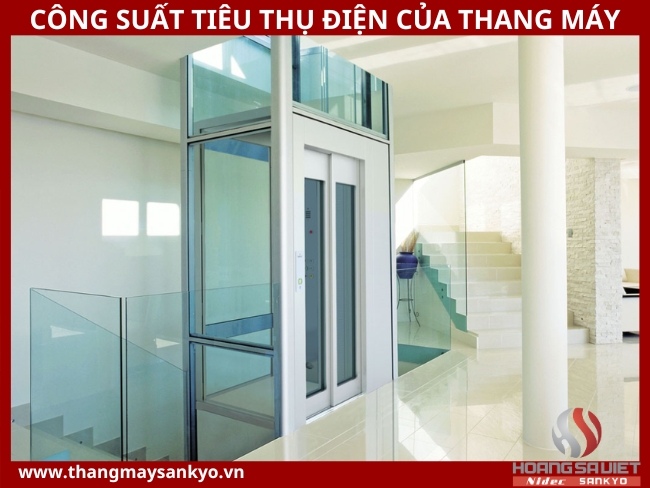
If the family has 6 members, then the elevator with a capacity of 3.2 kW is optimal. The Cibes A4000 family elevator series, with a load capacity of 400 kg and a power consumption of 220V, provides an energy-saving solution for your family.
Power consumption for 6-storey and 3-storey elevators is different.
Elevator capacity depends not only on the lifting weight but also on the number of floors served. The higher the number of floors, the larger the elevator capacity needs to be and vice versa. Therefore, choosing the appropriate load capacity is important, and customers should calculate and consider carefully.
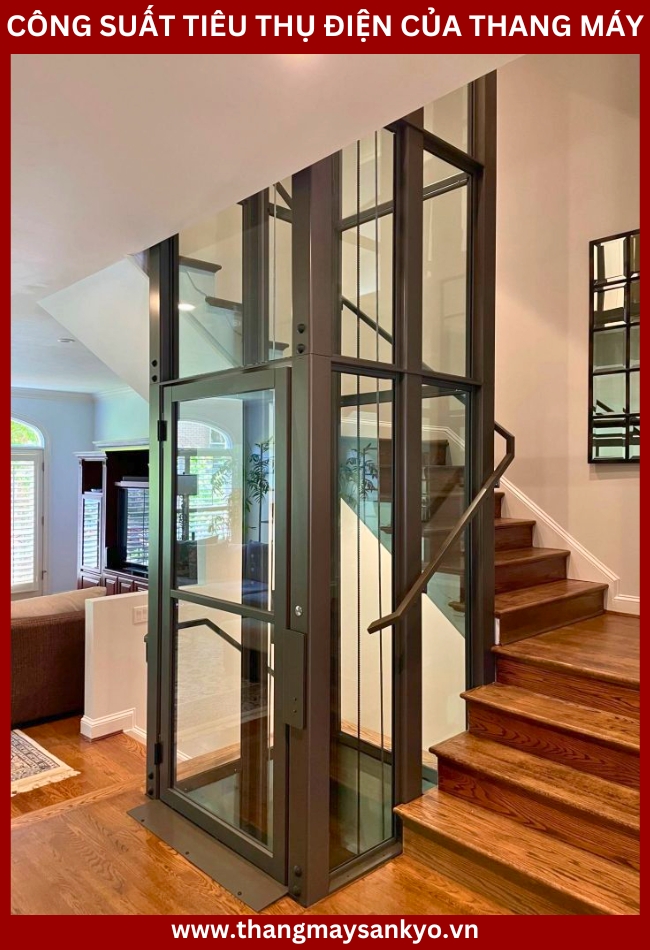
Regarding the number of floors and load capacity, the selection must be consistent and reflect the travel needs as well as the number of family members. Avoiding overloading is important, as it can affect the durability of the elevator if the capacity does not meet the requirements. On the contrary, choosing an elevator capacity that is too low compared to the needs can lead to unnecessary waste of electricity.
The power consumption of a home elevator depends on the number of times it is used.
The amount of elevator usage, no matter how little or much, affects the monthly electricity bill your family has to pay. If the home elevator is used frequently, this will lead to you having to pay a higher amount of electricity.
SEE MORE PRODUCTS:
HOW TO SAVE ELECTRICITY WHEN USING HOME ELEVATORS
Home elevators are a convenient convenience that offer many benefits, but they can also consume a significant amount of electricity. However, there are some simple ways to save electricity when using a home elevator:
Choose an elevator with the right capacity
-
Choose an elevator with the right capacity and size to suit your family's needs.
-
Avoid choosing an elevator with too much capacity, as it will consume more electricity than necessary.
Use elevators properly
-
Only use the elevator when necessary, instead of walking a few floors.
-
Avoid using elevators to travel short distances.
-
If you are traveling with a large group, use an elevator with a suitable capacity.
Take advantage of natural light
-
If possible, install windows or skylights in the elevator shaft to take advantage of natural light.
-
Use energy-saving LED bulbs for elevator lighting systems.
Turn off devices when not in use
-
Turn off the ventilation fan and lights in the elevator when not in use.
-
Use standby mode or turn off the elevator when you are away from home for extended periods of time.
Regular elevator maintenance
-
Regular elevator maintenance to ensure efficient and energy-saving operation.
-
Check and replace worn or damaged parts to minimize friction and energy loss.
ADDRESS PROVIDING OPTIMAL CAPACITY ELEVATORS
The process of choosing the appropriate power consumption of the elevator requires careful research and understanding. Customers can consult with friends, relatives, and those who have directly used the elevator to have a detailed view. At the same time, asking for advice from engineers and experts at elevator suppliers is also an important step to help make the most appropriate choice.
As a reputable elevator supplier in Vietnam , SANKYO Elevator is committed to providing quality and safe elevator products. SANKYO Elevator has implemented and installed many elevator projects across the country, receiving positive reviews from investors.
Reasons to choose elevator products at SANKYO Elevator :
100% genuine products, excluding products of unknown origin on the market.
Providing full range of elevators allowed to circulate in Vietnam, bringing diversity to customers.
Products are listed with full information about origin, technical specifications and especially exact power capacity.
Professional consulting, helping customers choose the elevator that suits their actual needs.
Fast, transparent and efficient working process.
Quick installation, saving time, ensuring progress for investors.
The best warranty and after-sales service on the market.
Customers coming to SANKYO Elevator will receive free consultation on the electrical capacity of all elevator lines. The team of engineers and consultants will provide full information and answer all questions, helping customers make the most optimal choice.
“Hoang Sa Viet Elevator - Always with you on every floor!”
HOANG SA VIET ELEVATOR - THE LEADING PRESTIGIOUS ELEVATOR COMPANY IN VIETNAM
Consultant: 0942.222.075 Office Headquarters: 184/20 Le Dinh Can, Tan Tao Ward, Ho Chi Minh City Hanoi Headquarters: No. 229, Van Tri Street, Van Noi, Dong Anh, Hanoi Website: thangmaysankyo.vn Email: hungpham@hoangsaviet.com
PRICE SUCCESSFUL!
PRICE UNSUCCESSFUL!

Hotline 0707.025.789
hungpham@hoangsaviet.com


OFFICE ADDRESS
- Headquarters:184/20 Le Đinh Can Street,Tan Tao Ward, Binh Tan District , HCM City
- Ha Noi branch: Đ. Giap Hai, Khoan Te, Gia Lam, Ha Noi
- Hung Yen branch: EcoPark Urban Area, Hung Yen
- Phu Quoc branch: ĐT45, Duong Đong, Phu Quoc
- Long An branch: Viettruss Aluminum - Ben Luc, Long An
- Factory: E5/13 Thich Thien Hoa, Le Minh Xuan, Binh Chanh, HCM City
BANK ACCOUNT
- THANGMAYNIDEC COMPANY
- Account number: 134053669
- Bank: ACB
- Branch: Bình Trị Đông, Bình Tân

CONTACT INFO
- Hotline: 0707.025.789
- Email:hungpham@hoangsaviet.com
- Website: https://thangmaynidec.vn/en
- Tax Code: 0310779837
- Business Registration No.: 0310779837, issued by Ho Chi Minh City Department of Planning and Investment on 15/04/2011

© Copyright 2026. Copyright belong to THANGMAYNIDEC Elevator